Jewish-Arab Group Raises Funds for Bomb Shelters in Bedouin Towns in Israel’s South
While Bedouin communities have one shelter per 50,000 residents, a nearby Jewish Israeli city has one per 270; Arab-Jewish group Standing Together launches a shelter fundraiser: ‘Israel started the war with Iran without thinking about those who can’t protect themselves,’ an activist says
March 08th, 20PM March 08th, 22PM
Most Israelis fell into a routine when missile sirens sounded across the country this week, heading to safe rooms in their buildings or to public shelters. They enter when sirens sound and remain inside until receiving the all-clear from the Israeli army’s Home Front Command. This simple, effective system saves lives.
But what do you do when you don’t have a safe room, and your town has no shelters at all? Where do you take cover from an incoming ballistic missile or shrapnel if the only protected space is miles away?
This is the situation for most Bedouin in the Negev, which covers a large part of southern Israel, according to a January report and residents’ testimonies. The Negev Coexistence Forum for Civil Equality found that some 65 percent of Israeli Bedouin have no safe rooms at home, that very few towns have municipal shelters and that schools lack hundreds of required bunkers.
Government maps show that among the seven recognized Bedouin municipalities and villages, there are just six shelters – one per 53,825 residents.
Five of those shelters are in the city of Rahat; most villages and towns have no shelters at all. In comparison, the nearby Jewish city of Ofakim has 150 shelters – one per 273 residents.
During the 12-day Israel-Iran war in June, civil society stepped in where the state did not, supplying prefabricated shelters and devising solutions to keep the Arab community safe and informed.
With the outbreak of the war last Saturday, they sprang into action once again. The Jewish-Arab coexistence movement, Standing Together, began raising money to supply Bedouin communities in the Negev with badly needed prefabricated shelters.
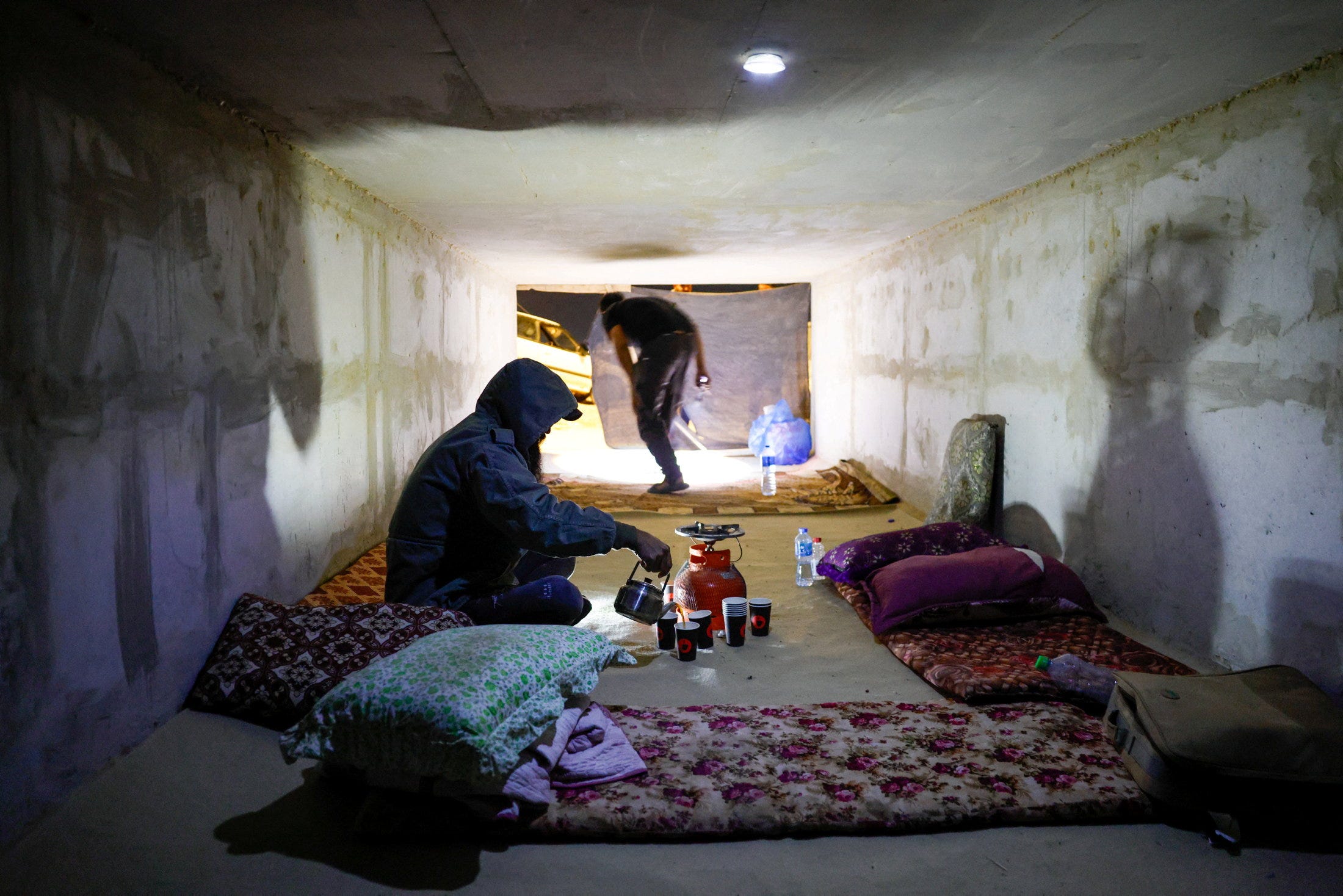
“We started this campaign because we saw that in June there were a lot of [missile] hits and shrapnel falling in the south, mainly in the unrecognized villages. There’s no protection there – people hide under bridges or in trenches. We saw that the Iranian missiles are very, very dangerous, and we thought that we should launch this kind of campaign,” Ghadir Hani, an activist and member of Standing Together’s leadership committee, tells Haaretz.
She added, “We know that there are about 39 unrecognized villages there with about 130,000 unprotected residents. We knew that we couldn’t provide shelters for everyone, but maybe we could get one and place it in a central area that people could reach quickly. That’s what we did – we started a campaign and solicited donations.”
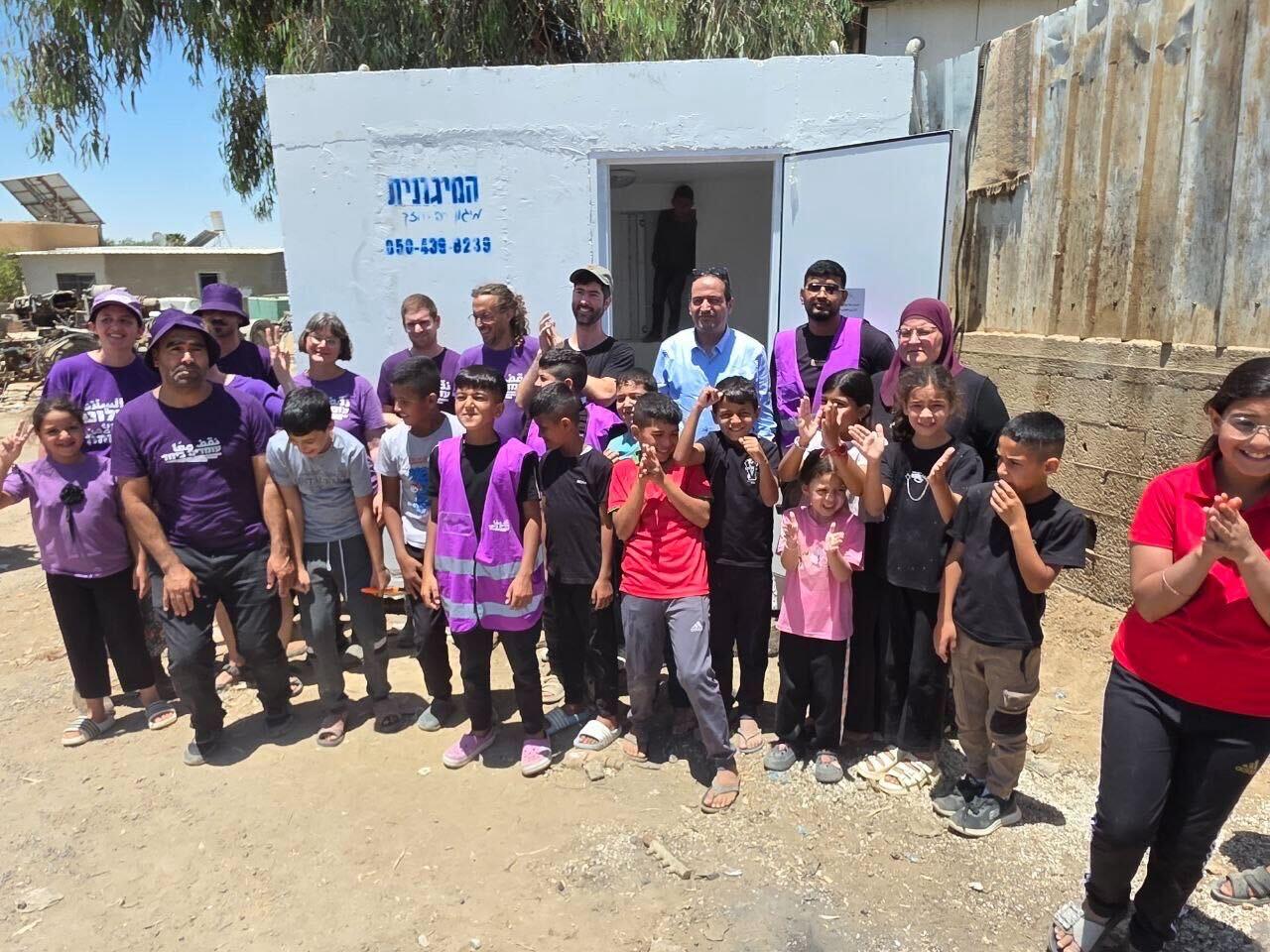
During that round of fundraising, they purchased and placed 20 bomb shelters in areas that lacked protection.
When Israel and the U.S. launched another war with Iran last week, people in the south started reaching out to the organization again. “Israel started the war without preparing and without thinking about those who don’t have shelter,” Hani says.
She lived and worked for years in the Negev before moving north to Acre – and for this campaign, she is helping identify villages and towns that need protection. “As a Palestinian citizen of this country, it’s very important to me to take part in something like this, which gives back to the Bedouin Arab community in the south.”
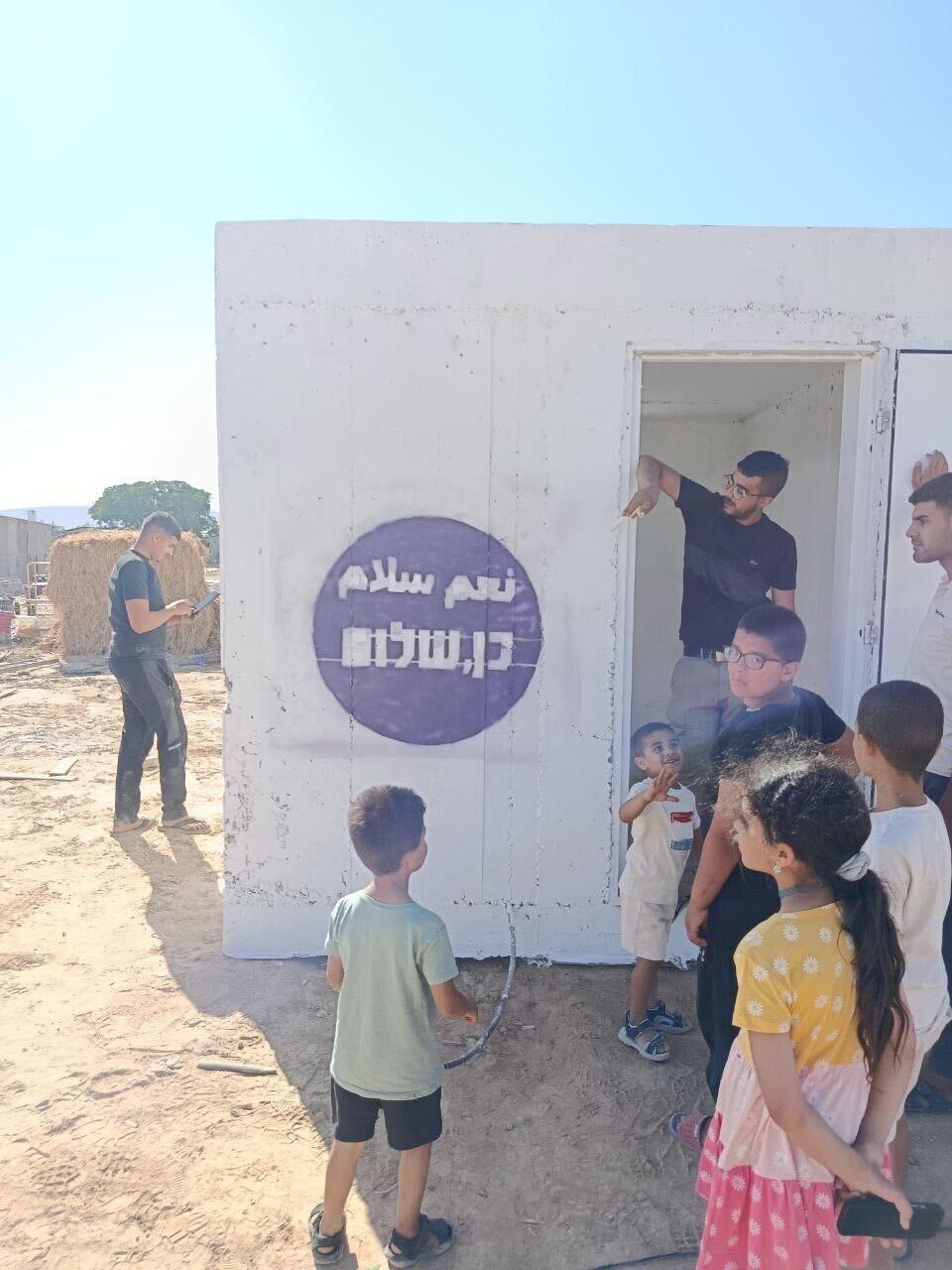
In many cases, Hani says, shelters that these towns aren’t built to withstand ballistic missiles. “They were fine for the rockets that came from Gaza in the previous war,” she says, but are insufficient for the kinds of rockets fired by Iran.
She says they had raised tens of thousands of shekels less than an hour after the latest fundraising campaign began. “It was incredible. People’s devotion and the response we’ve been getting is very moving. It’s not for granted that after almost three years of war, during which people have been donating the entire time to rebuilding and to the hostages, that people would still give.”
The donations come from Jews and Arabs, from Israel and abroad.
As of Thursday, they had raised 400,000 shekels (nearly $130,000) since the current war began, enough for nine prefab shelters. The organization will prioritize villages closest to Israeli army bases. They are at the highest risk of being hit by an errant missile or shrapnel and have little protection. Each shelter has room for about 20 children, the village’s main priority during a siren.
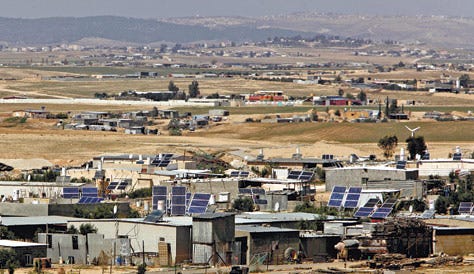
Last year, Standing Together placed a shelter in Bir Hadaj, south of Be’er Sheva. Most of the population there works in agriculture, including shepherding sheep and camels. Aish Abu Asa, 60, is an activist in the town and makes his living by selling bundles of hay for people’s flocks.
“I have children and grandchildren; we live in Bir Hadaj. Like everyone else here, we don’t have safe rooms in our homes. When we see that there are incoming launches, we stay in our houses, and the houses are trailers,” he explains.
“The kids cry when they hear the sirens, and their parents take them inside to calm them down so they don’t see the strikes. We don’t have much else to do. We turned to all sorts of authorities for our family, which is four or five households, to get a shelter, just one for five households. We haven’t gotten one yet.”
Bir Hadaj is recognized by the state but not regulated. “That means that we have the land for a town, but not the services that people need,” says Abu Asa. The community feels abandoned from all sides. “We don’t have a listening ear in the Knesset,” he says. “They’re ignoring anyone who’s Bedouin. We have nothing here.” The town has a few shelters, including one in the local mosque and one donated by Standing Together.
“That’s better than nothing,” he says. “But it’s not enough. It’s a town with thousands of people.”
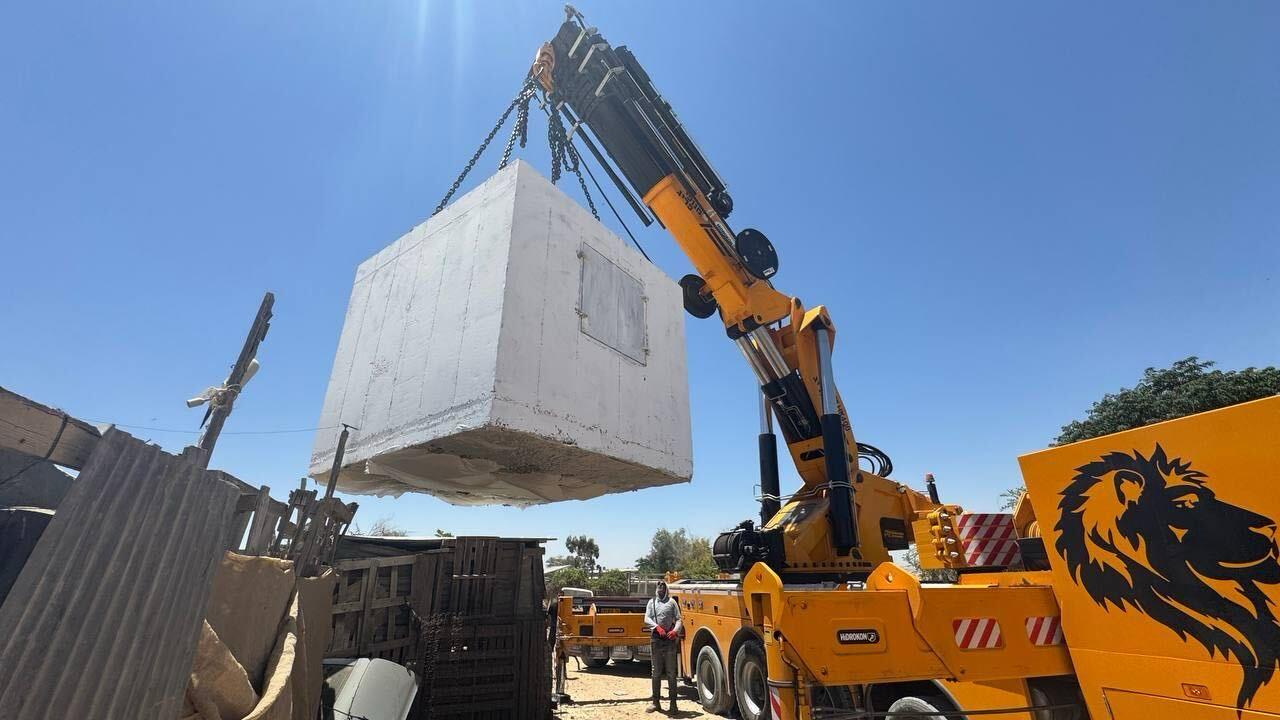
Hani says that in civil society, “We’re doing what the government should be doing.”
“It’s terribly sad, but at the same time, we can’t stay on the sidelines and not take action. We know that this government isn’t interested in the Arabs. This is also evident in how it’s handling crime and violence in the communities. There’s a policy of abandonment and, truly, a lack of willpower. The community doesn’t get the security it deserves,” she adds.
At the end of the conversation, a siren sounds in Acre, and Hani takes cover with her family. The missile was fired from Lebanon, and they have less than a minute to get to shelter. “We’re sitting here in a shelter; other people aren’t,” she says. “A lot of the older Arab towns don’t have shelters at all, not prefab, not municipal shelters, nothing. We get requests from there, too. From the Jewish communities in the north, too. And, sadly, we have to deal with that, and not the state.”
As Standing Together works to try to bring Home Front Command-approved shelters to the Negev, she notes that although they provide the best protection, they are not 100 percent successful at blocking missiles, as a direct hit on a shelter in central Israel’s Beit Shemesh that killed nine Israelis showed.
“There are missiles that penetrate below ground, too. What can you do?” she sighs. “Peace, peace is what will protect us, sadly.”