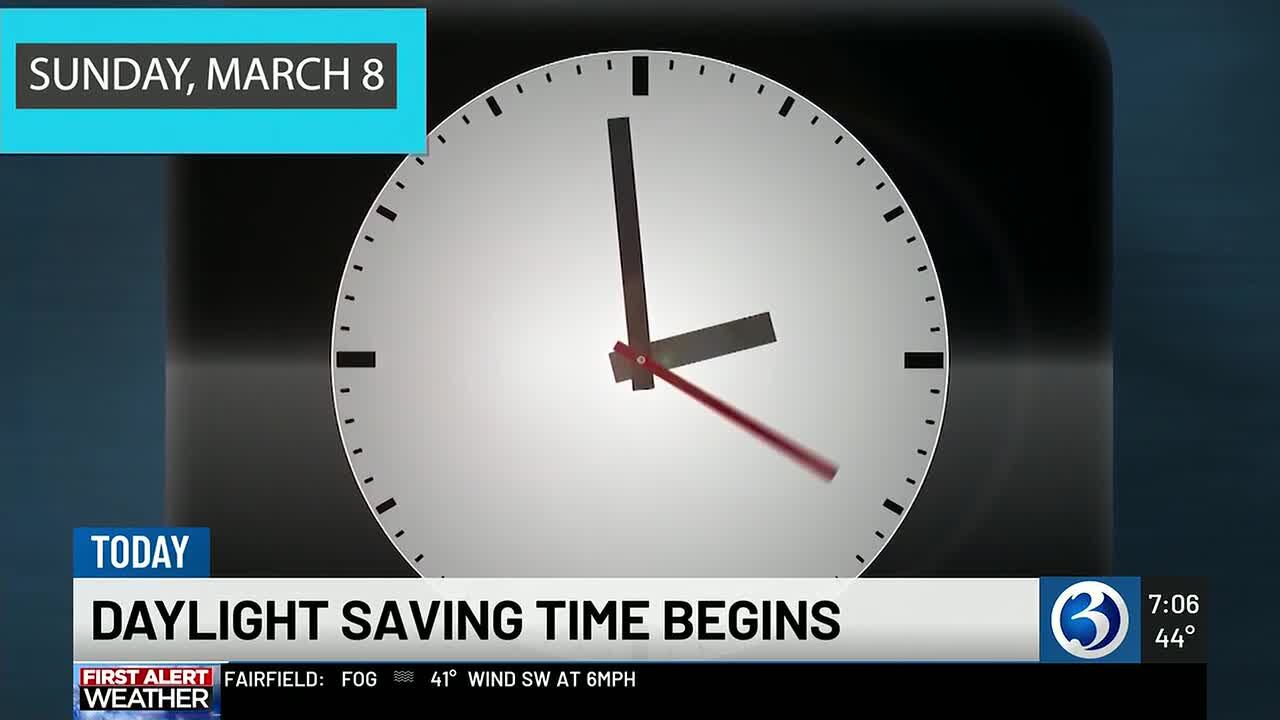
NEW HAVEN, Conn. (WFSB) – Clocks moved forward one hour Sunday morning for daylight saving time, and health experts say that lost hour can disrupt sleep patterns for weeks.
Brianna Garrison, an associate professor at Southern Connecticut State University’s School of Social Work, said the shift affects everyone — not just those with existing sleep conditions.
“What we tend to do is get excited about sunlight being there in the evening, but we forget we need it early in the morning,” Garrison said.
Garrison said morning sunlight is what sets the body’s circadian rhythm. With most morning routines now falling in the dark, she said people should make an effort to get outside when the sun does come out.
“If you haven’t had that sunlight in the morning, all of the things that kind of set your systems to be alert and awake, um, hasn’t been triggered,” Garrison said.
She said it can take about 20 days to return to a normal sleep pattern and suggested a sun lamp as a possible aid during the adjustment period.
New Haven resident Mark Scecina, who has mild sleep apnea and has gone through sleep trials at Yale, said the loss of early morning sunlight is a real setback.
“You need big, bright sunlight when you get up. With daylight saving time you can’t do that,” Scecina said.
Garrison noted the time change also carries benefits for mental health, pointing to more evening sunlight and the opportunities it creates.
“There’s so many good benefits aside from just, you know, the sun is out and the landscape might be prettier. It’s also just those points of connection, the points of movement, the fresh air,” Garrison said.
Scecina said the longer days are also good for his garden.
“The length of day is longer and the plants start growing faster,” he said.