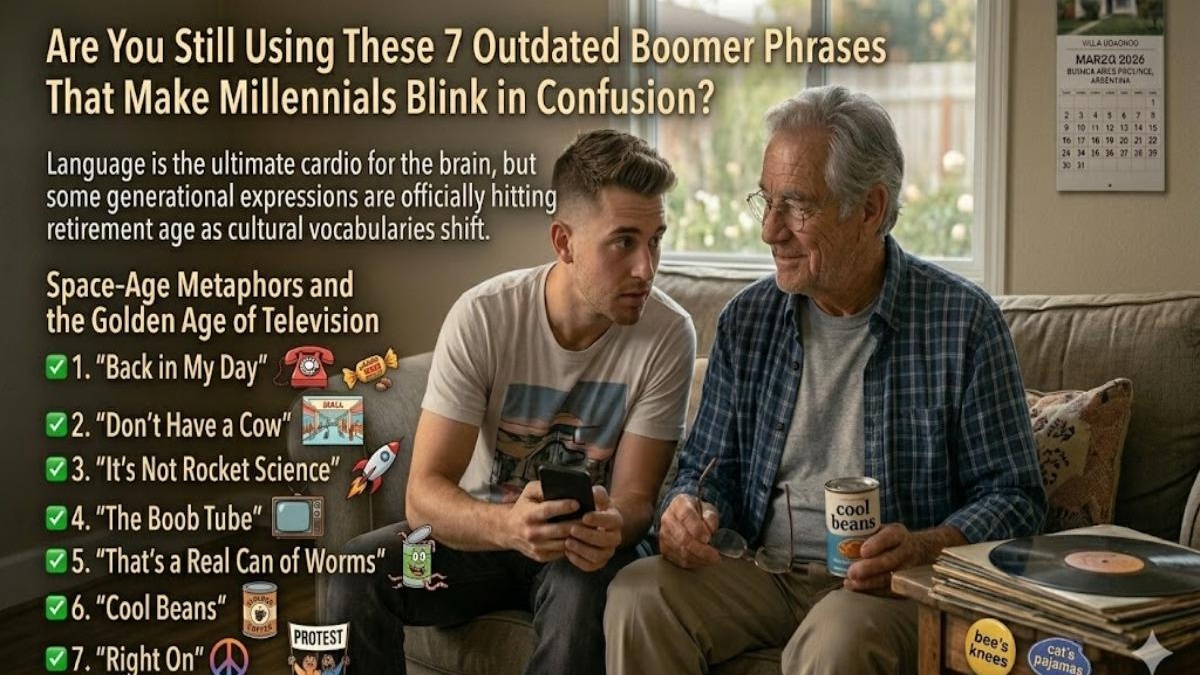
As a lifestyle and fitness expert based in the U.S., I’ve always believed that staying “fit” isn’t just about your deadlift PR; it’s about staying mentally agile and socially connected. Language evolves with every generation, and Baby Boomers (born between 1946 and 1964) developed a vocabulary that’s equal parts nostalgic, charming, and occasionally baffling to the youth of today. Over time, some of these expressions have faded into obscurity, while others stubbornly hang on—linguistic relics from a postwar era shaped by rapid cultural change.
If you still find yourself dropping these “classic” lines during your morning power walk or at the health club, you are keeping a unique piece of American history alive. However, you might notice the younger crowd giving you a puzzled look. The first culprit is the iconic “Back in My Day,” a phrase that serves as the verbal equivalent of clearing your throat before a keynote speech. While it usually precedes a fascinating story about 10-cent candy bars or rotary phones, it immediately signals to everyone within earshot that a generational history lesson is about to begin.
Space-Age Metaphors and the Golden Age of Television
Another heavy hitter is “Don’t Have a Cow,” which peaked in the 1980s. To a Boomer, this simply means “don’t overreact,” but to a Millennial or Gen Z listener, it sounds like a literal agricultural warning. While younger generations prefer saying “it’s not that deep,” this phrase remains a colorful echo of early cable TV and mall culture. It represents a time when slang was loud, dramatic, and unapologetically retro, a stark contrast to the minimalist “slay” or “bet” used by the fitness enthusiasts of today.
For those who grew up during the space race, “It’s Not Rocket Science” remains the gold standard for describing a simple task. Born in the post-Sputnik era, this phrase represented the pinnacle of human complexity. Today’s youth might just shrug and say “it’s easy,” but Boomers stay loyal to these space-age metaphors. It serves as a lingering reminder of a time when the cosmos captured the world’s imagination and defined our collective intelligence.
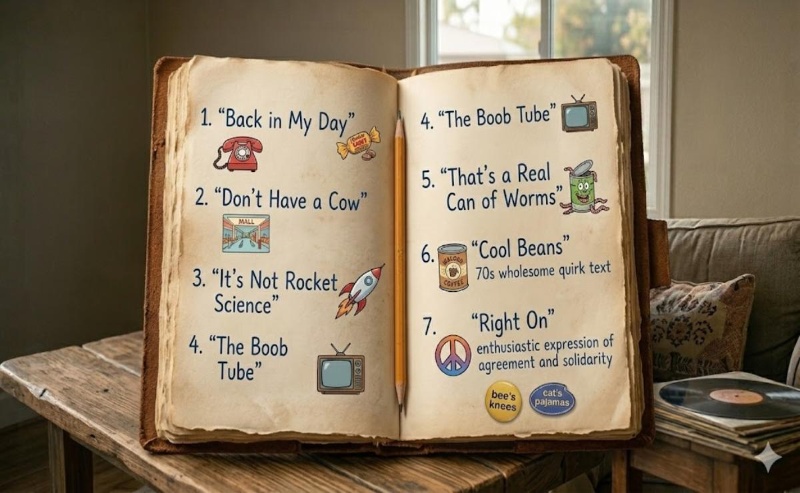
Television itself hasn’t escaped the linguistic chopping block. Boomers often refer to the TV as “The Boob Tube,” a sarcastic jab suggesting that mindless viewing would turn you into a “boob,” or a fool. Ironically, since most people under 40 don’t even own a traditional television anymore—preferring streaming on tablets or phones—this phrase feels doubly outdated. It’s a linguistic fossil from an era when channel surfing was considered a mildly lazy pastime rather than a professional binge-watching career.
When a situation gets complicated, a Boomer will inevitably warn that you’re opening “A Real Can of Worms.” This vivid expression describes a mess that is nearly impossible to clean up. While younger cohorts might describe a chaotic situation as “messy,” they lack the dramatic imagery of wriggling chaos spilling everywhere. For the older generation, this phrase perfectly captures the unpredictable nature of life’s most difficult social and professional hurdles.
Perhaps the most polarizing phrase in the Boomer toolkit is “Cool Beans.” Originating in the 1970s, it’s a quirky, wholesome way of saying “great.” Why beans? No one really knows, but mid-20th-century American slang loved food-based expressions. When spoken with total sincerity today, it often delights or embarrasses grandchildren in equal measure, proving that some habits—and some beans—simply refuse to go cold over the decades.
Then there is the classic “Right On,” a staple of 1960s and 70s counterculture. Once an enthusiastic expression of solidarity and rebellion found at protests and concerts, it now occasionally sounds like a substitute teacher trying a bit too hard to connect. Yet, for the Boomer generation, it still carries the residual energy of unity and radical cultural change, reminding us that language was once a tool for social revolution.
As we move toward a fully digital, on-demand world, the disappearance of these phrases reflects a broader cultural transformation. The retirement of Baby Boomers marks the closing of an analog chapter in modern life. Whether you’re at the gym or the grocery store, pay attention to the words you use; you might just be preserving a vanishing dialect of the American experience every time you tell someone to “keep on truckin’.”