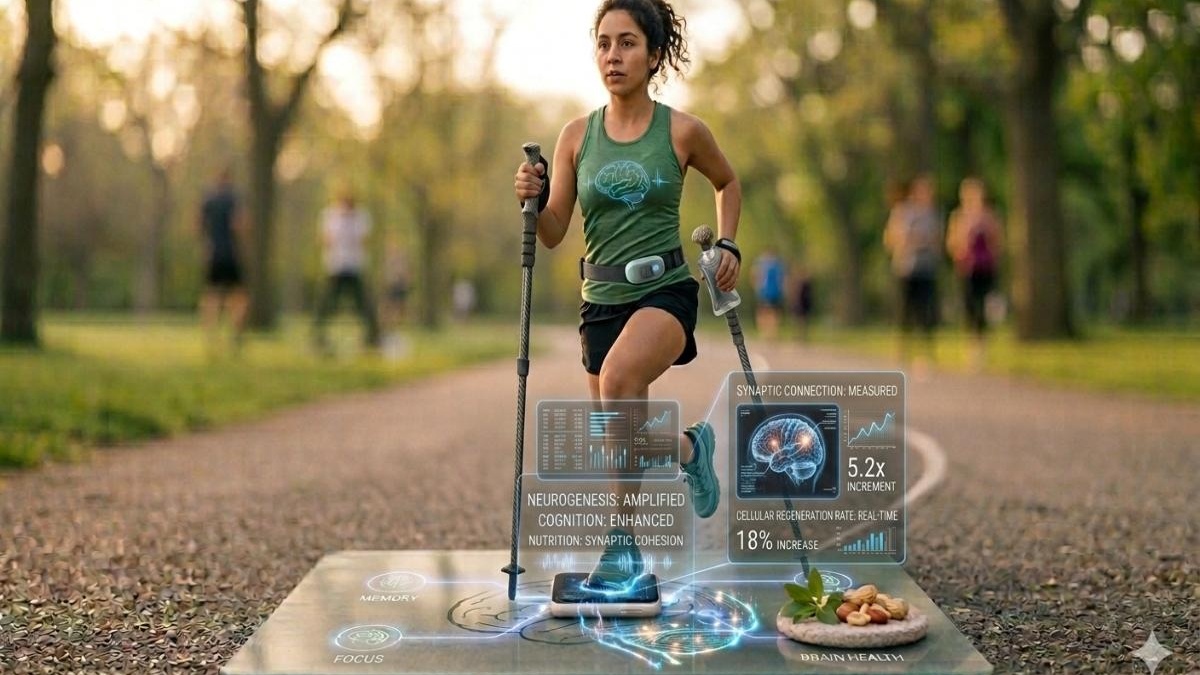
For years, scientists have known that regular physical activity is associated with a lower risk of Alzheimer’s disease. However, the exact biological mechanism remained unclear. New research from the University of California, San Francisco, published in Cell in 2026, has identified a liver-produced enzyme called GPLD1 that appears to play a key role in protecting the aging brain.
How exercise strengthens the brain’s protective barrier
The enzyme GPLD1 increases in the bloodstream during exercise and helps reinforce the blood-brain barrier, a protective shield that prevents harmful substances from entering brain tissue. In experiments with mice, higher levels of this enzyme reduced inflammation, limited the leakage of harmful molecules into the brain, and even improved memory performance in older animals.

Why this discovery matters
As people age, the blood-brain barrier can become weaker and more permeable. This allows inflammatory molecules and toxins to enter brain tissue, which may accelerate processes linked to Alzheimer’s disease, including the buildup of amyloid-beta plaques. By strengthening this barrier, exercise may help slow the early biological changes that contribute to cognitive decline.
Exercise triggers multiple brain-protective signals
Scientists also note that GPLD1 is only one part of a broader system activated during physical activity. Exercise stimulates muscles and other organs to release molecules such as lactate and irisin, which support brain plasticity, reduce inflammation, and promote healthy neural connections. Together, these signals create a protective environment for the brain.
What this means for future treatments
The discovery opens the possibility of developing therapies that mimic some of the brain benefits of exercise for people who cannot engage in regular physical activity. Still, researchers emphasize that physical movement itself remains one of the most powerful tools currently available to support long-term brain health and potentially reduce the risk of Alzheimer’s disease.