Quick Take
- Tarantulas are one of many animals that undergo an energy-intensive molting process.
- When a tarantula sheds its exoskeleton, it can also regenerate lost or damaged limbs.
- Many people mistake a molting tarantula for one that is dying or distressed, as the arachnid flips onto its back for the process.
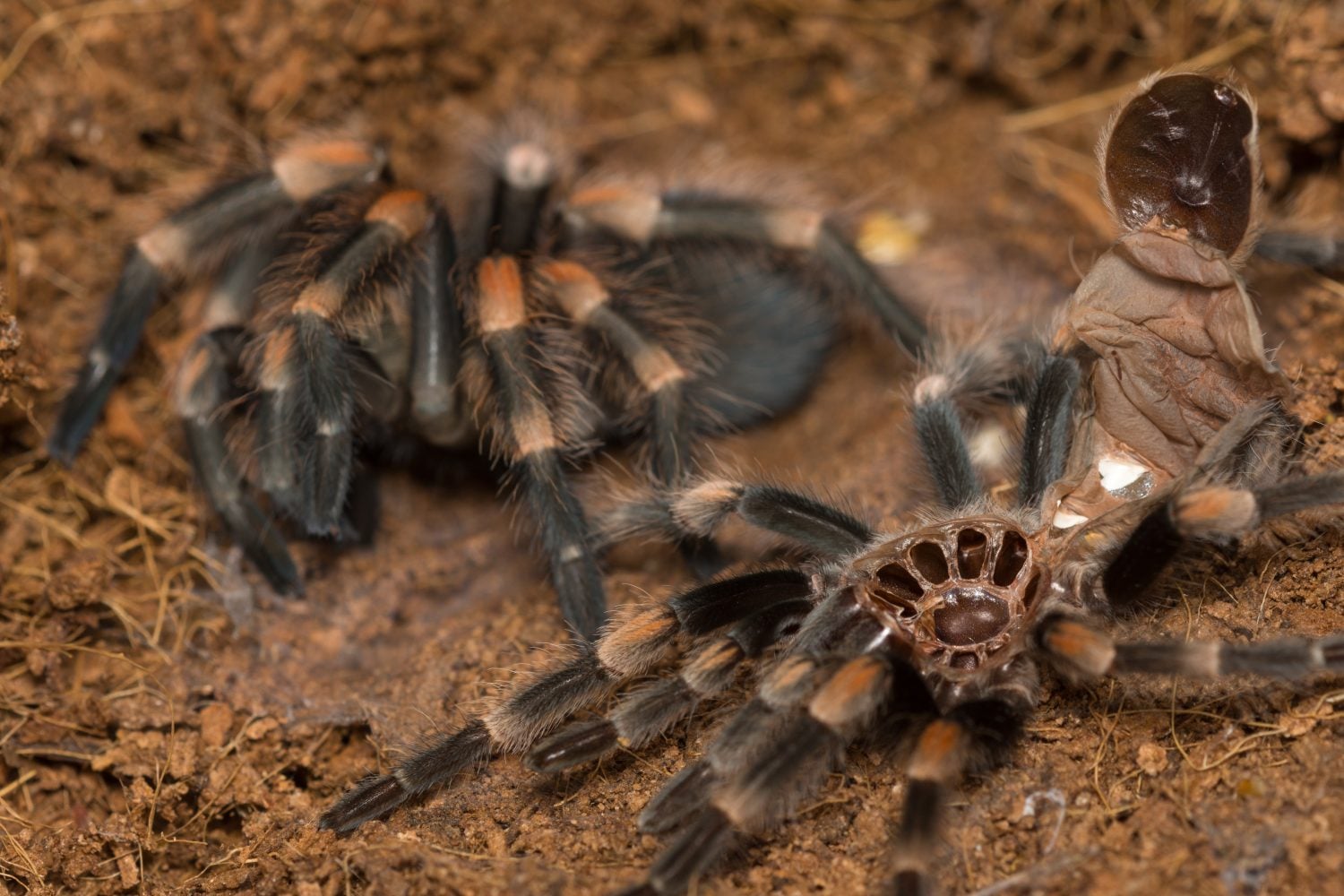
This video shows the complex yet fascinating molting of a tarantula. Specifically, it captures a Brachypelma boehmei. Also known as the Mexican Fireleg or Mexican Rustleg Tarantula, this species is native to Mexico.
The short video might indicate the process is quick, but this particular molting lasted for around two and a half hours. This clip reduces the molting to a two-minute time-lapse, speeding it up for viewing pleasure and convenience.
As you can see, when a tarantula is ready to begin its shedding process, it will flip onto its back. To the untrained eye, a molting tarantula often appears to be dead or dying. In fact, many tarantula owners panic at the sight of their pet’s first molt. However, it’s actually the safest position for the spider when undergoing such a physically demanding task.
Looking to learn more about this incredible arachnid and its unique molting process? Keep reading to hear an expert’s take on the tarantula as a fountain of youth.
Tarantulas Molting Process
Throughout their lives and as they grow in size, tarantulas continue to shed their exoskeletons. This process is known as molting, which occurs in various animals, like lobsters, crabs, and some insects.
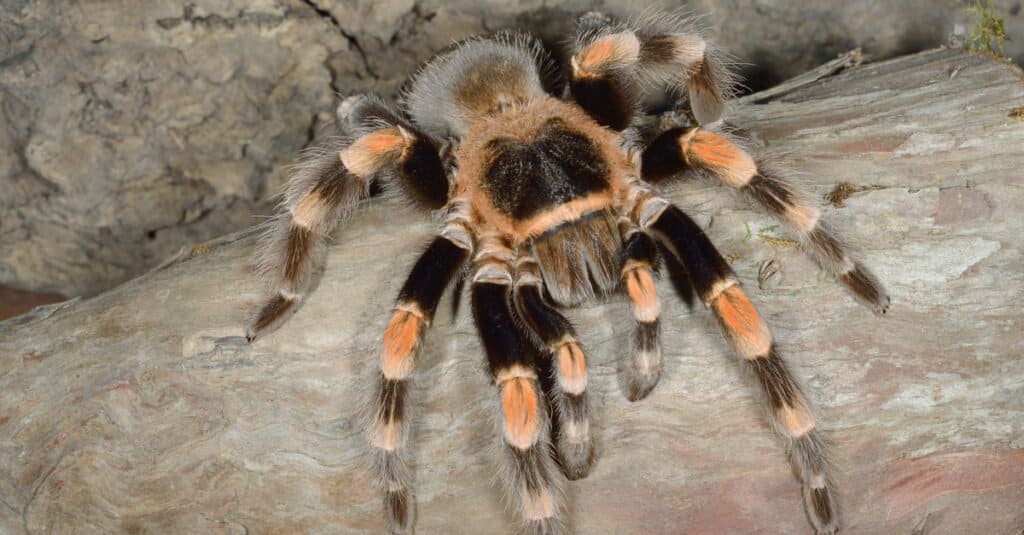
For tarantulas, molting goes beyond just shedding their outer exoskeletons. In fact, it also involves shedding the lining of their sucking stomachs and even the outer layers of their fangs, which emerge soft and white before hardening into black needles. The animal can also regenerate damaged body parts. This is a crucial part of their growth and survival. In fact, tarantulas can actually begin to regrow lost limbs over the course of a single molt.
The molting process lasts for around 15 minutes to several hours. Depending on their life stage, molting can occur multiple times per year. Juveniles will molt several times per year, while mature tarantulas molt far less (typically, once every year or two).
Why Do Tarantulas Molt on Their Backs?
Another interesting fact about tarantulas is that they flip onto their backs when they molt. As you can see in the video posted above, a molting tarantula might appear to be in distress. Because of this positioning, many people see a molting tarantula and believe the animal must be dying. However, though enduring a tiring process, it’s really just outgrowing and shedding its old exoskeleton.
“When a tarantula is ready to shed, it’ll position itself on its back, [as] that position gives it leverage that it’ll need in order to push out of its old exoskeleton,” says Kris Bagnara, Associate Certified Entomologist and Chief of Service for All U Need Pest Control. “A fun fact most don’t know is that the spider will slowly pump fluid throughout its body to create pressure, [which] in turn helps split the old exoskeleton and gives it room to slide free without damaging any of its joints or limbs.”
While it might be terrifying to witness, molting is a natural and necessary process for the arachnid. In fact, failing to molt at crucial times can be fatal or severely detrimental to the spider. Still, the molting process itself can also be physically stressful and tiresome, which is why the tarantula often appears to be struggling on its back.
“In actuality, it’s the safest position for its molt to happen,” Bagnara explains.
How Tarantulas Regenerate Their Lost Limbs
Tarantulas are incredibly interesting creatures, possessing the ability to regenerate their lost limbs over time.
“During their molt, tarantulas will shed way more than just their exoskeleton,” Bagnara explains. “Parts such as the lining of the stomach, the digestive tract, and even the outer layer of its fangs are all part of the old exoskeleton, so over a short time, they are replaced once the spider pulls itself free of its old shell.”
Naturally, molting requires significant energy from the tarantula. In some instances, it can be high-risk for vulnerable, weak, or old spiders. However, it’s a necessary part of their growth and regeneration.
“Tarantulas have the amazing ability to regenerate lost limbs, as new tissue will form internally after injuries,” Bagnara says. “So, each time they molt, that partially formed limb emerges just a little larger and stronger than it was previously. Over the course of several molts, depending on the age of the spider, the limb can almost completely return to normal size and strength.”