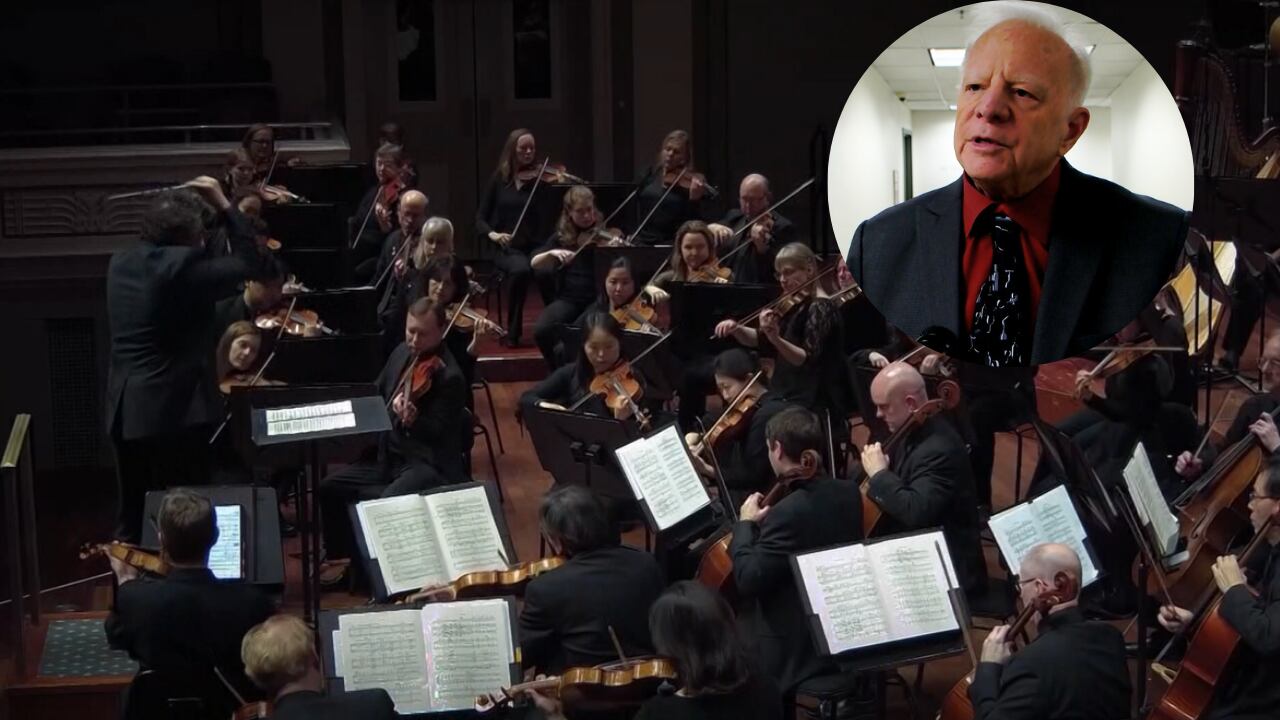
NASHVILLE, Tenn. (WSMV) – One block from Broadway’s honky tonks, the Nashville Symphony has been building its own sound for 80 years.
Founded at the end of World War II, the orchestra now calls the Schermerhorn Symphony Center home, and Grammy-winning conductor Leonard Slatkin is leading what he calls the final chapter of his career.
Slatkin first stood on the Schermerhorn stage following the death of longtime maestro Kenneth Schermerhorn, opening a hall that bears his predecessor’s name. At 81, after leading orchestras across the globe, he said Nashville is where he chose to finish.
“I have one more orchestra left in my life,” Slatkin said. “I’d like to think that I can bring something new and fresh to the organization and to the city.”
The orchestra has faced setbacks before. Floodwaters filled the hall in 2010. COVID silenced stages worldwide. Slatkin said the music endured through both.
“There are always little challenges, but you have to overcome them,” he said. “You just cannot allow the physical destruction to take you down when you’re an artist.”
Three milestones in one year
This year, the symphony marks three anniversaries at once: 250 years of the United States, 80 years of the Nashville Symphony, and 20 years of the Schermerhorn Symphony Center.
Slatkin said American music’s global reach reflects something larger than any single anniversary.
“There is no other place on the planet that does as much in music as the United States does,” he said. “The music has had such a lasting impact on the world for a country so young to have done that.”
To honor the semiquicentennial anniversary for the United States, the Nashville Symphony launched their “America 250″ series, highlighting the contributions American composers have made throughout history.
Their next concert in the series is “An American in Paris,” where you can purchase tickets for here.

More than anniversaries
Slatkin said what matters most is not the milestones — it’s the moment a first-time concertgoer walks through the doors.
“You see it the minute they walk into the hall,” he said. “They open it and go, ‘Whoa, I’ve never seen anything like this.’”
He described the orchestra’s role in the city in broader terms.
“It’s the Nashville Symphony. It is about Nashville,” Slatkin said. “We are ambassadors for this place.”
He also reflected on what classical music means to culture at large.
“History of music is the lifeblood of all arts, whether it’s painting, sculpture, other artworks, architecture,” he said. “These are things that are the building blocks of a society.”