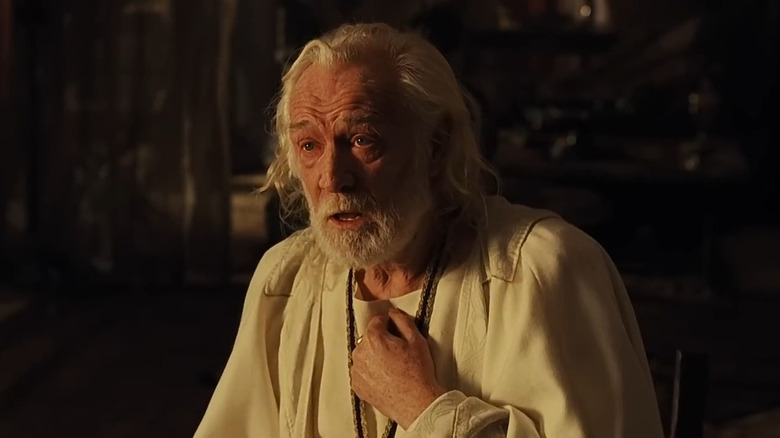
2000’s “Gladiator” revitalized the sword-and-sandal genre with its epic depiction of ancient Rome. While “Gladiator’s” Maximus (Russell Crowe) wasn’t a real person, the film does depict several historical figures, played exceptionally well by an excellent cast. Joaquin Phoenix plays Commodus, a real Roman emperor who didn’t die facing off against a gladiator in the arena, but instead was strangled to death by his wrestling partner, Narcissus, after it was discovered that he planned to execute several people close to him.
Another historical figure who appears in the film is Marcus Aurelius, who was indeed a Roman emperor and the father of Commodus, though he died of natural causes. He is played by the inimitable Richard Harris, one of several “Gladiator” actors who have passed away.
Harris was already a veteran actor with plenty of impressive films and awards under his belt. He turned out to be a natural fit for Marcus Aurelius, with his depiction aligning with the real-world man’s writing and is historically analogous, even if it’s not entirely accurate. While he’s killed in the film by his son after naming another to succeed him, that’s not the fate that truly befell one of Rome’s greatest emperors. Instead, he died of natural causes in his sleep at the age of 58, on March 17, 180 CE, passing control of Rome to his eldest surviving son, Commodus.
Read more: The Most Controversial Movie Costumes Explained
Marcus Aurelius was known as the Stoic emperor
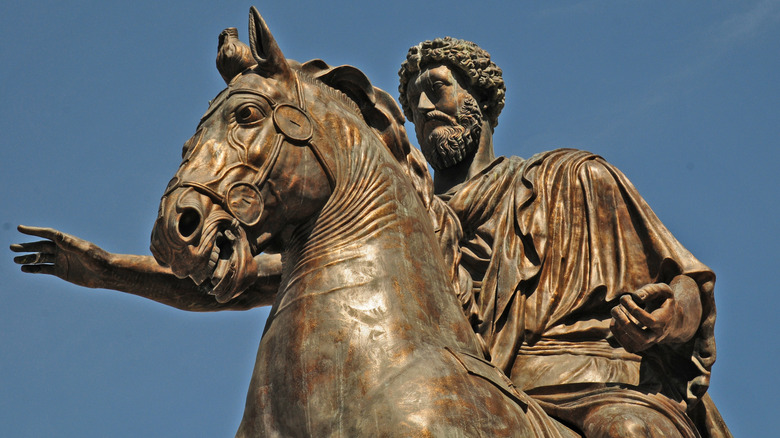
Richard Harris’s excellent job at approximating who Marcus Aurelius was was possible thanks to the large amount of writing that has survived for nearly two millennia. Aurelius was known as the Stoic Emperor, being a loyal follower of Stoic philosophy. He served as Roman emperor from 161 to 180, and was the last member of the group known as the Five Good Emperors, the rulers who oversaw Rome through the Pax Romana.
While Commodus’ death ultimately ended the period, he was not among the five who made it possible. As was common, Marcus Aurelius served with others, as Lucius Verus (his adoptive brother) served as co-emperor from 161 to 169, while Commodus ruled alongside his father from 177 until his death in 180. While the Pax Romana is considered a period of peace, conflicts did arise, though these were often decided in Rome’s favor, helping to expand its wealth and territory.
Marcus Aurelius’ reign consisted of an increase in the persecution of Christians, the Parthian War, and other large-scale conflicts, including the conquest of the Germanic peoples depicted in the movie. One of the most devastating events during his rule was the Antonine Plague, which resulted in the deaths of up to 7.5 million Romans. Marcus Aurelius’ book “Meditations” is one of the most important literary documents in ancient Stoic philosophy, cementing his legacy as the Stoic emperor.
Differences between history and the film
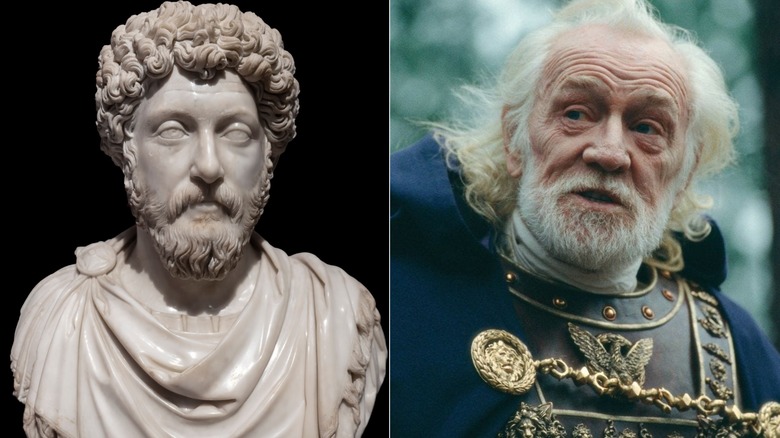
Whenever a movie adapts history for entertainment, there are going to be changes. As a result, there are several historical inaccuracies in “Gladiator” that make the movie better, with the film ultimately acting as a work of fiction told through the lens of historical figures. One of the biggest errors is the depiction of Lucius Verus. In real life, he was Marcus Aurelius’ adoptive brother and co-emperor, while the film has him as the purported son of Maximus.
Marcus Aurelius also has many inaccuracies, as his death didn’t occur near the battlefield that ended the Germanic campaigns. The film begins in 180 CE, so the year of the emperor’s death is correct, but seeing as Maximus is fictional, their interactions are entirely fabricated. The film’s core element, that “Marcus Aurelius had a dream that was Rome,” carries through the plot.
This doesn’t align with Aurelius’ true life, as he never intimated a desire to return Rome to a republic. In addition, the film suggests that Aurelius wasn’t a fan of the games, though, in reality, he encouraged them as a way to entertain the public. He enjoyed boxing and wrestling as a young man, and while not a huge fan of watching arena fights, he still attended. This was an oppositional view of Stoicism, so the film is more aligned with what’s said of Marcus Aurelius’ appreciation of the games.
If you enjoyed this article, sign up to our free newsletter for the biggest movie and TV news delivered straight to your inbox. You can also add us as a preferred search source on Google.
Read the original article on .